A 6-session series that works from the outside in — resolving the root of inefficient holding patterns throughout the fascial network.
What Is SI?
Equine Structural Integration is not a relaxation massage. It is a systematic approach to resolving inefficient holding patterns throughout the horse's body by releasing tensions and restrictions in the fascial network — the connective tissue web that surrounds every muscle, organ, and structure.
The goal is to bring the horse's body into a more balanced and efficient relationship with gravity. When the fascial system is restricted, horses compensate — developing asymmetries, soreness, reduced range of motion, and diminished performance over time. SI addresses those restrictions at their source.
The technique draws from the work of Ida Rolf and is applied to the equine body through the Equine Natural Movement (ENM) Institute curriculum, founded by Joe and Jacqueline Freeman with 30+ years of experience.
The Protocol
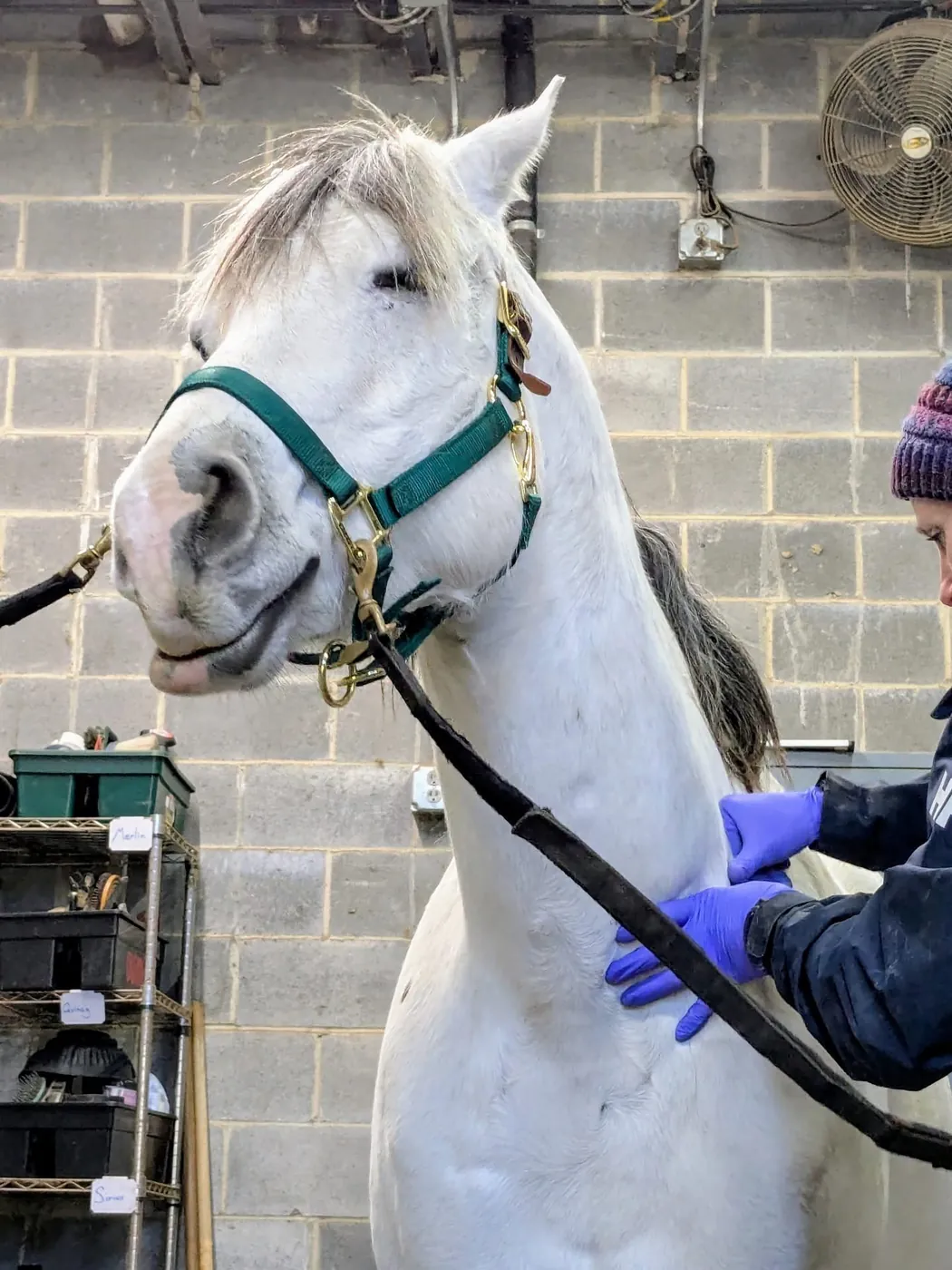
Sessions are designed to progress from extrinsic to intrinsic — working superficial structures first, then moving progressively into the core. This sequence builds on itself, developing the body's tensegrity and creating lasting change.
A methodical, systematic unwrapping of tension throughout the whole system. The intent is to release the tension holding negative patterns and begin mapping the body — identifying where deeper holdings are presenting — while starting to introduce positive tension patterns that promote structural integration within the horse's tissue and nervous system. Every session begins with this full-system unwinding. It is intentional: removing minor and satellite tensions first allows the horse to relax quickly into a predictable, familiar process.
After the system unwrapping, deep work addresses the shoulders and hind end — connecting the shoulders into the neck and barrel, and the hind end into the barrel. This session integrates the two major impulsion and propulsion systems. When these ends are restricted, the back suffers. Freeing them allows the back to move freely as well.
The barrel is where lateral flexion originates, and the work done in Session 2 prepares it to unwind here. After system unwrapping, deep barrel work allows full system connection and integration — each part begins doing its own job rather than compensating for another. The session ends by connecting the barrel back into the shoulders and hind end.
After the system unwrapping, the remainder of this session is fully customized to the individual horse — targeting whatever negative patterns still need unwinding and reinforcing the positive ones being established. By sessions 3–4, the horse is just beginning to gain balance. Because the body will revert to familiar compensation patterns under stress, continued repatterning is essential. Neuroplasticity comes with repetition — this is structural integration in practice.
These sessions follow the same approach — system unwrapping followed by customized deep work — while beginning to gauge how well the horse is holding its gains. By this stage, we start asking how long the horse can hold and how strong they are becoming, with more intentional strengthening and workout recommendations. Session spacing typically moves to 3–4 weeks, though horses with more complex systems may still need sessions as close as 2 weeks. Around Session 6, a clear picture of the horse's trajectory emerges and a customized maintenance plan can be established. Horses with complex systems and layered influences tend to stabilize around session 10–13.
Session Experience
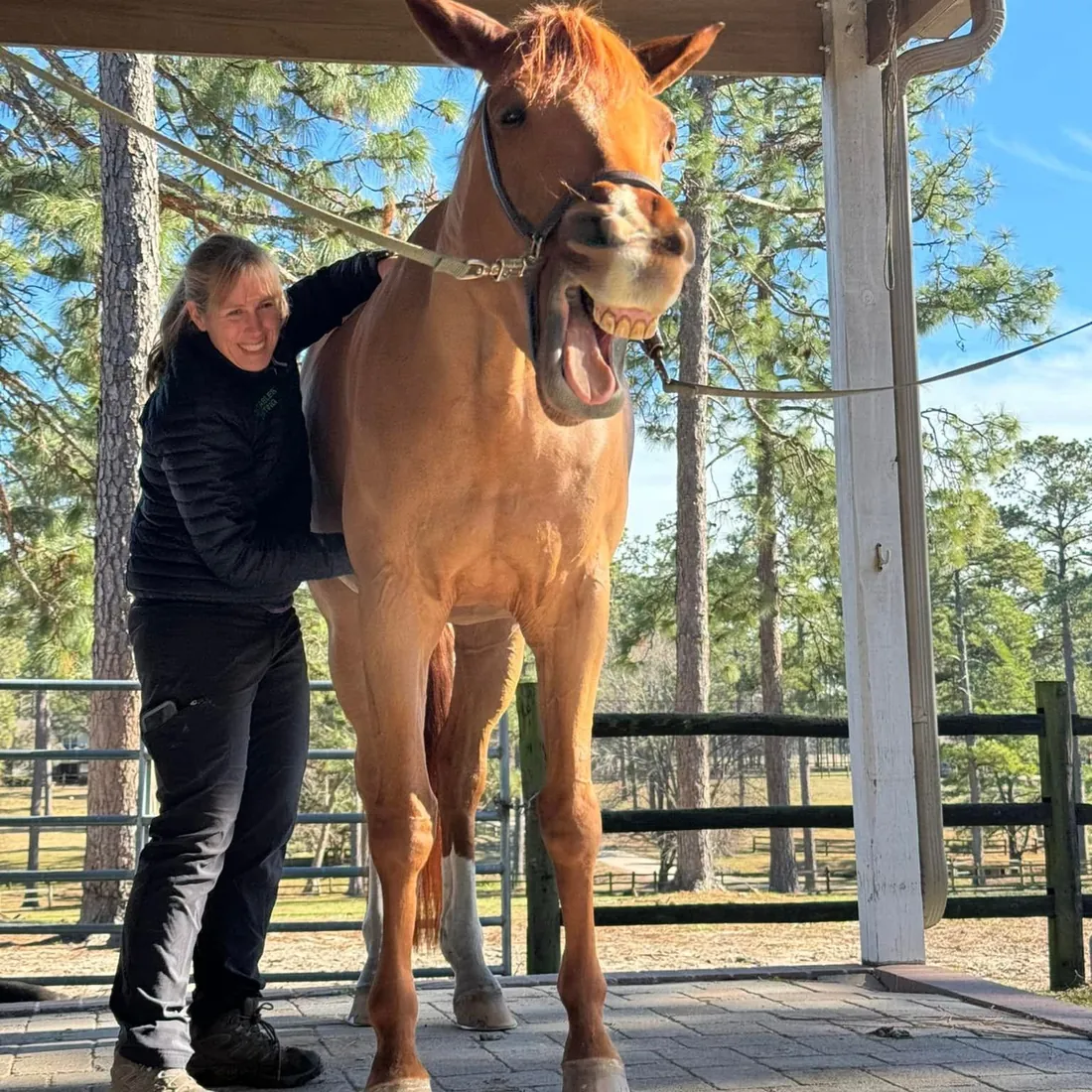
Each session lasts 1 to 1.5 hours. Mary works the entire body — generally starting at the front and working back — allowing the horse to guide the pace. She watches for subtle releases (licking, chewing, blinking, yawning, blowing) and waits for permission before entering tender or braced areas.
Owners and trainers are always encouraged to be present — both to receive findings in real time and to learn the home care protocol that supports the work between sessions.
Following each session, Mary provides written notes and a specific home care plan — which may include stretching routines, under-saddle exercises, or referrals to your veterinarian or farrier.
Book Your First SessionSI is appropriate for horses at any level — sport horses, pleasure horses, senior horses, and those recovering from injury or surgery. If your horse is showing compensations, asymmetries, reduced range of motion, resistance under saddle, or a change in attitude, structural integration may be exactly what they need.
Start the Conversation